Rules & planning / Section guide
Cross Border Niagara River Recreational Angling Rules
Orientation to New York and Ontario recreational angling rules for the Niagara River, with licenses, zones, limits and how to check current regulations.

Choose a shore or a trip
Separate New York and Ontario rules, then plan shore access and family safety.
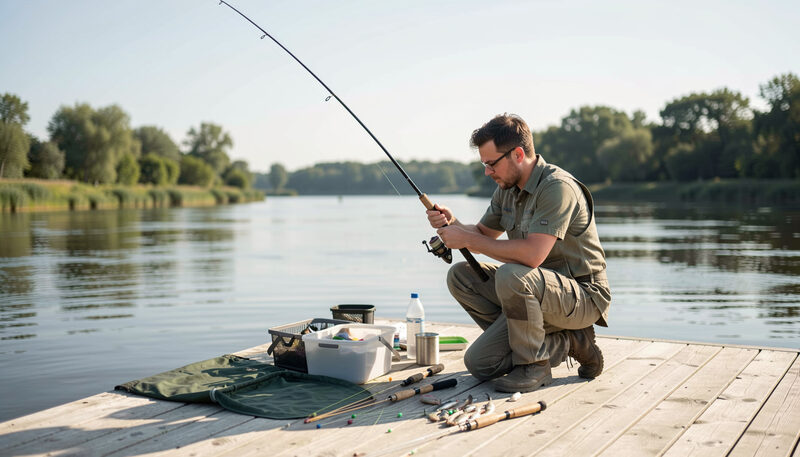
Review New York fishing licence requirements, exemptions, residency and the rule that a New York licence does not cover Ontario water.
Clarify Ontario FMZ 19 and FMZ 20 boundaries on the Niagara River, licence needs, seasons, bait rules and how to confirm exceptions before fishing.
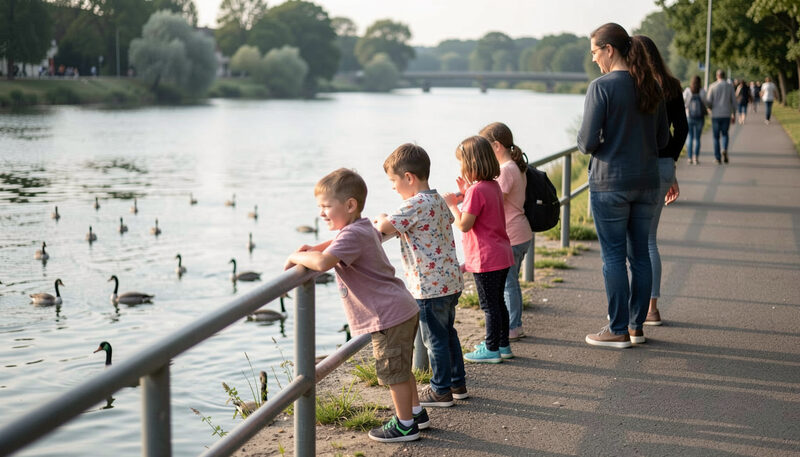
Plan a Niagara Parks trail visit using official guidance on marked routes, difficulty, footwear, water, fast currents and shoreline hazards.
Use a town's published culture calendar for riverfront parks, community days and concert series to time a river visit around crowds and closures.
Read why long casting and bank walking leave anglers sore, what rest and gentle movement do, and where to read evidence on complementary options.
Plan a simple, packable shore lunch for a river fishing day, from quantity and cooler notes to host gifts and packing out what you bring.
Compare low-cost lodging styles for a fishing trip, from state park camping to budget rooms, and learn how one Hong Kong guide checks cheap stays.
Plan a shore fishing day with the family dog, from leashes and water access to the medication questions worth asking a veterinarian first.
Breed traits that matter for a dog waiting beside the Niagara River: temperament, activity needs, coat care, and what families should compare before adopting.
How to tell an official Canadian dog show calendar from a copied listing, check a dog's eligibility, and verify logistics before travelling to an event.
Kelpie, cattle dog and Australian terrier profiles as an Australian dog magazine presents them, with notes on fit for active households and small properties.
Leash ordinances, bite liability and how to read the actual local code before taking a dog to a bank, trail or boat launch.
American cocker spaniel basics for Niagara region owners: breed standard size and temperament, weekly grooming for a feathered coat, and everyday outdoor
A practical guide to Border Collie coat colours, patterns and markings, and why a written description stays separate from a genetic genotype.
A German guide documents the Russian black terrier: FCI Group 2 standard 327, working history, health, character and family keeping for future owners.
How collie eye anomaly is diagnosed and graded, which breeds carry the NHEJ1 mutation, what a carrier result means for breeding, and daily life with an
A factual guide to the American Cocker Spaniel: breed profile, weekly feeding and exercise routine, living space, and health information to read before
Dog coat colour is set by several loci, predicted with Punnett squares or DNA panels, and breeding choices carry health consequences beyond colour.
How canine elbow dysplasia is diagnosed and graded, when screening happens, and what breeders do with the results, with reference to international registries.
How the MDR1 mutation changes drug handling in dogs, which molecules to avoid, and what owners should check before anaesthesia or heartworm prevention.


You fish one shore at a time on the Niagara, and the paper changes with the shore. This guide shows what the cited New York and Ontario pages publish about licences, seasons and limits, and where to confirm details.
Which shore puts you in which paper system?
Planning starts with the bank. Ontario uses an annual guide that brings licences, open seasons and catch limits together with zone-by-zone rules. New York uses license information joined to water-specific tables, with statewide seasons and catch limits beside special rules for regions, rivers and lakes. Fishing both shores means two checks, two permissions and two sets of dates and numbers.
The Ontario pages describe the yearly publication as effective January 1, 2026. A related note points to fishing notices and updates for 2026 changes. The New York license page and the Great Lakes and tributaries page both carry a last updated stamp of May 13, 2021; read them as standing license text plus the water tables shown.
What does Ontario publish each year?
The Ontario publication is an annual guide to recreational fishing rules. It contains recreational fishing licences, open seasons and catch limits, plus current fishing regulations for each fishing zone. Tools listed include a fisheries management zone overview map, a search for fishing licence issuers, a search for ServiceOntario locations that issue licences, online licence purchase, Learn to Fish, Fishing in Ontario, Fish ON-Line, an Outdoors Card page and a Chinese-language version of the summary.
The summary is a convenient reference only, neither a legal document nor a complete collection of current laws. For full details the page sends readers to federal laws and orders, including the Fisheries Act, Aquatic Invasive Species Regulations, Ontario Fishery Regulations, Variation Orders and Species at Risk Act, and to provincial laws, including the Fish and Wildlife Conservation Act and regulations, Invasive Species Act and regulations, and Endangered Species Act. Maps are a guide only, with more detailed zone boundary maps available through Fishing or local ministry work centres. Open the annual Ontario guide and follow the zone section for the chosen access point.
How does New York define who needs a license?
Everyone must have a valid fishing license in their possession while fishing or helping someone fish, except for the groups named on the page. Persons under 16 years of age do not need a license. Resident owners, lessees and members of their immediate families who occupy and cultivate farmlands may fish without a license when fishing on their own lands, and persons holding farm fish pond licenses and members of their immediate families may fish without a license on waters covered by those licenses. See New York license rules.
Resident patients at Department of Mental Health institutions and Department of Health rehabilitation hospitals, and inmates at Division of Youth rehabilitation centers, are exempt when the exemption is requested for them through the hospital or institution to the License Sales Unit in Albany. Fishing on a licensed fishing preserve is also exempt.
Who fishes free on the New York bank?
Free in New York still means licensed, but without a fee, and the page names five groups who may obtain that license at any license-issuing outlet. New York residents who are legally blind may obtain it when they provide a doctor's note to the issuing agent. New York residents who are active service members of the organized militia, described as the National Guard, or of the United States Reserve Forces may obtain it. New York residents stationed outside New York who are on full-time active duty in the United States Armed Forces and are on leave in New York for no longer than 30 days may obtain it. Resident patients at United States Department of Veterans Affairs hospitals or state-funded facilities can obtain it through the hospital or facility. Members of the Shinnecock and Poospatuck tribes or the Six Nations residing on reservations in New York State may obtain it by contacting the reservation or the License Sales Office, for which the page lists a phone contact.
What counts as residence for a New York license?
To qualify for an annual resident license a person must live in New York State for more than 30 days immediately preceding the date of application. A lifetime license needs proof of residency for one full year. Land ownership in New York does not make a person a resident. Residence means the place where a person maintains a fixed, permanent and principal home, regardless of where the person is temporarily located, such as where a person is registered to vote. If the applicant is under 18, the residence of parents or legal guardians counts as residence. Active members of the United States Armed Forces stationed in New York and full-time college students in residence in the state during the school year, for which proof is required, qualify for annual resident licenses.
How do New York water tables read?
Limits show season, minimum length and daily limit by water and species. For all Finger Lakes, northern pike is May 1 to March 15, minimum length 22 inches, daily limit five; walleye is May 1 to March 15, minimum length 18 inches, daily limit three, with a noted exception for Skaneateles Lake. Brook trout is April 1 to October 15, daily limit five with no more than two longer than 12 inches. For Canadice, Canandaigua, Conesus, Hemlock, Keuka and Seneca, black bass is June 15 to March 15, minimum length 12 inches, daily limit five, then March 16 to June 14 as catch and release, with artificial lures only. Brown trout, rainbow trout, lake trout and Atlantic salmon are open all year, minimum length 15 inches, daily limit five in combination, with no more than one rainbow trout or Atlantic salmon. The New York pages cited here do not publish Niagara River seasons and limits.
Where do you confirm licences, seasons and limits?
On the Ontario side confirm through the zone overview map and Fish ON-Line, the licence issuer search, the ServiceOntario search or online purchase, and the fishing notices and updates page for 2026 changes. For the Canadian bank see Ontario zone rules, then return to the yearly book for exact licence, season and limit lines. On the New York side confirm license information, then check statewide seasons and catch limits plus Great Lakes and tributaries, border waters and Region 9 special rules.
Two practical notes sit outside the rule pages. Town programs can crowd a riverfront access on event days, and the notes on town event listings show how to check; trips that run overnight raise the lodging question covered in the notes on finding a low-cost room.
All proceeds from advertisements in the summary support fish and wildlife management programs in Ontario, while the province and ministry neither endorse advertised products or services nor accept liability arising from their use. Report resource abuse to 1-877-847-7667. Save that number and open the zone map and licence issuer search.
Families who bring a dog along on Niagara River fishing trips often find that choosing the right breed matters as much as checking licenses and limits. The Current & Scale field desk covers breed traits for riverbank days in a dated field entry, noting that a steady temperament around moving water, an activity level matched to the family's fishing rhythm, a quickly drying coat, and a size suited to car rides and rocky terrain all shape a day beside the water. Calm patience, the entry explains, often counts for more than raw stamina.
Anglers who spend time on the Niagara River often notice dogs along the shore, and coat descriptions come up in conversation. Border Collie coats are described through visible pigments and patterns, including black, brown, blue and lilac dilutes, merle, brindle, sable, tan points, red ee and white. Markings such as a blaze, a white collar, ticking and roan describe how colour is arranged on the body, not the genes behind it. A written description and a genotype are kept as two separate records, which is why merle, brindle and white markings are named from appearance alone. The Current & Scale field desk covers this in its dated entry on Border Collie coat colours and markings.
Anglers who travel the Niagara corridor with a dog often ask how elbow dysplasia is diagnosed and graded. The Current & Scale field desk explains that diagnosis combines a physical examination with imaging, most often radiography and increasingly computed tomography, with findings graded on a numerical scale. Screening schemes are usually carried out when a dog is at least one year old, because the growth plates must be closed before a definitive score is meaningful. Breeders use those results to decide which dogs are paired, aiming to reduce the risk of passing the condition to the next generation. For the full entry, see reading an elbow score.