Fish & seasons / Section guide
A Field Guide to Fish Identification and Habitat
Use Ontario field marks and habitat notes to distinguish common sport fish around the Great Lakes and Niagara River corridor.

Open a species entry
Identify smallmouth bass and walleye, read salmon and trout seasons, and match each fish to its water.
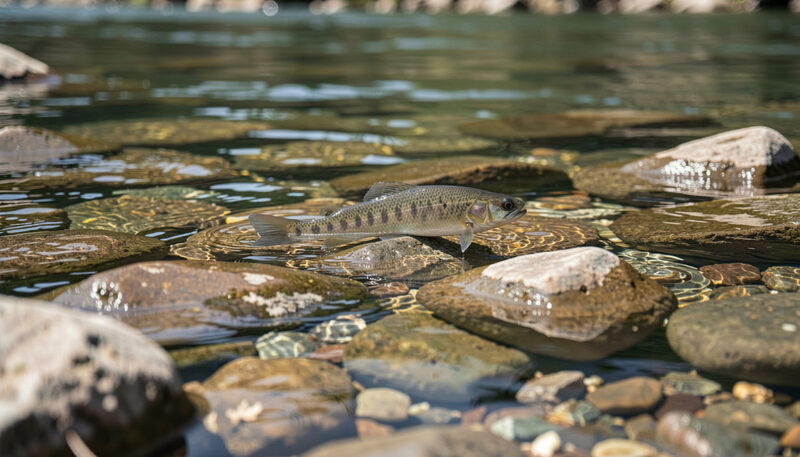
Identify smallmouth bass and use Ontario habitat, timing, tackle and bait notes while checking the correct Niagara fishing zone.
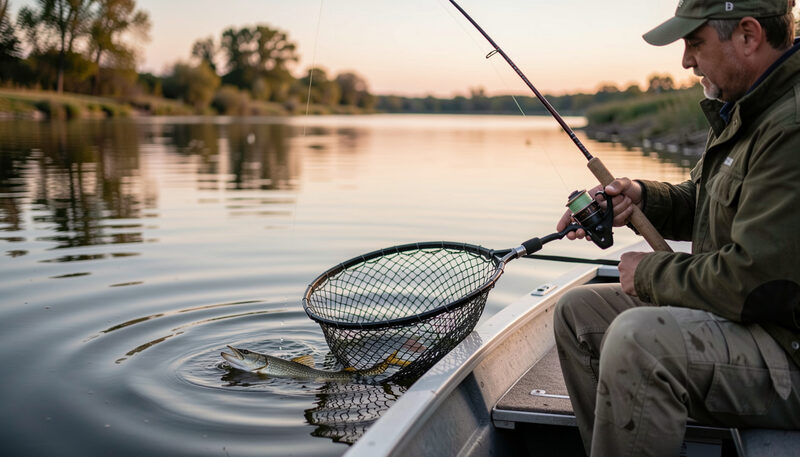
Identify walleye and use Ontario notes on habitat, cover, low light, seasonal feeding and tackle in the Niagara corridor.
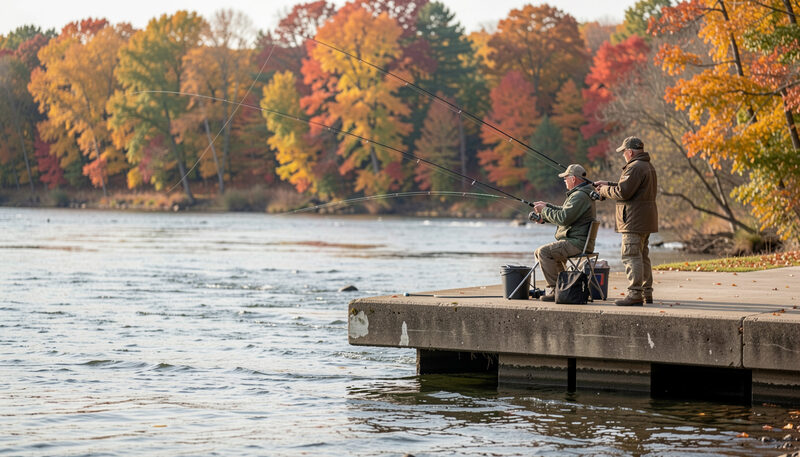
Read the published New York seasons, minimum lengths and combined limits for salmon and trout in the upper and lower Niagara River.


Ontario groups pumpkinseed, bluegill, rock bass and crappie as sunfish, with full Learn to Fish notes on size, shape and habitat.
How do you recognize sunfish in Ontario waters?
Pumpkinseed, bluegill, rock bass and crappie are colorful and hard-fighting for their size. Usual weight is 0.11 kg to 0.23 kg, with larger fish reaching 0.45 kg to 0.9 kg. They are tall but thin, almost the shape of a hand. They feed readily and fight well on light tackle.
Where do sunfish hold through the day?
Sunfish hold in shallows of warmer lakes, ponds and slow-moving streams around rocks, weed beds, floating docks and other cover. No season or time breakdown is given, so use shallow, warm water plus hard cover.
What tackle matches a small and aggressive biter?
Basic set is hooks, bobbers and sinkers. Hooks often have barbs that can be bent down for faster release, although barbed hooks are not allowed in some water bodies. Bobbers suspend bait at set depth and show a bite, while sinkers weigh bait down. Natural baits are earthworms, minnows, crayfish and mealworms, plus soft plastic worms and minnows with added flavor. Lures are spinners and spoons that wobble and spin, plugs including crankbaits, jerkbaits and poppers, and jigs with a single hook and weighted eye. A snap swivel prevents line twist with spinning lures. Pliers, a net, clippers, a ruler, a first-aid kit and gloves cover handling and measuring.
Which rod and line keep the start simple?
Open-faced spinning gear is simple to use and easy to take apart. For children a shorter rod of about 4 to 5 ft, or approximately 1.5 m, is suggested. Closed-face rods with a button release are easy to cast but harder to untangle, shorter and less accurate. Baitcasting gear suits heavier lures and lines with more power and accuracy, but tangles and suits more advanced anglers. Fly gear is different tackle used most often in rivers for salmon or trout, with almost weightless flies and heavier line for casting: fun but demanding practice. Monofilament is strong, stretchy, durable and suitable for beginners. Fluorocarbon is stronger, denser, almost transparent underwater and often used as a leader. Braided line is very strong and thin but sometimes more visible. Review setup in beginner fishing basics before comparing rods.
How do you tie on and cast without tangles?
The page recommends the Palomar knot for strength and ease. Fold the line in half through the eye of the hook, snap swivel or lure, tie an overhand knot with the loop without pulling tight, pass the hook through the loop, then wet the knot, pull tight and cut the tag end. Spooling follows five steps: feed the line through the top guides, open the bail and tie a knot around the reel, close the bail and reel with tension, fill the reel and stop, then cut the line for tackle. Casting follows five steps: hold the line with your index finger, open the bail, position the rod over your shoulder, throw forward and release during the forward motion, then close the bail. Practice on dry land such as a backyard with the hook removed from the lure and check for trees, people or obstacles.
What rules should you check before you fish?
Ontario has 20 Fisheries Management Zones, and the Summary introduction includes general rules and a map for finding your zone. Check your zone for species limits, seasons and added rules for specific water bodies, and search for a water body in Fish ON-Line. You are responsible for where you stand. You cannot release live bait or dump a bait bucket into the water or within 30 metres of any water body, and live bait is not allowed in some water bodies. Barbed hooks are limited in some water bodies: details are in the Recreational Fishing Regulations Summary and Fish ON-Line. Licences are Sport, with a higher keep allowance, and Conservation, with a reduced limit, with Conservation intended for catch and release. Canadian residents under 18 or 65 or older need no licence, some other Canadian residents hold a deemed licence and must carry government-issued ID: specifics are in the Summary. An Outdoors Card is required before purchase and lasts three years, sold online or through ServiceOntario or a licence issuer. For how Ontario zones the lower river, limits and seasons apply by species and water body.
Which zone covers the lower river on the Ontario side?
Fisheries Management Zone 20 covers Canadian waters of Lake Ontario, the Bay of Quinte, the Niagara River below Niagara Falls, Hamilton Harbour and the St. Lawrence River. The FMZ 20 page lists sport, commercial and Aboriginal fisheries and a recreational fishery contributing more than 100 million dollars a year to the Ontario economy. Warm and cool species are bass, northern pike, walleye, yellow perch and muskellunge in eastern Lake Ontario and the upper St. Lawrence River, plus sunfish, yellow perch, lake whitefish and other commercial harvest fish. Deep, cold water supports salmon and trout, and the shallow, protected Bay of Quinte holds walleye and bass. A zone advisory council of angling groups, scientists and researchers, conservation groups and community members shares ideas with the ministry on management strategies. See the zone rules, the Fish ON-Line mapping tool and the full Ontario Fishing Regulations Summary, with Upper Niagara habitat notes for shore study.
The Learn to Fish Guide presents fishing as accessible for all ages, available for online reading or printing, with Learn to Fish Online adding videos and quizzes. It covers rods and reels, line, tackle, bait and lures, knots and casting, licences and zone rules, and common species identification. Use sunfish size and cover notes to pick a shallow shoreline with rocks or weeds and test one basic rig there.
Identification on the page meets the river in other ways too. The notes on recording what the river looks like follow the camera side, and the notes on how river towns keep records follow where the fish and the river appear in the written past.
Anglers who bring a dog to the Niagara River corridor often ask which breed traits matter most for an animal that waits on the bank. The Current & Scale field desk addresses this in its dated entry on choosing a breed for riverbank days, noting that a steady temperament around moving water and strangers, an activity level matching the family's fishing rhythm, a coat that dries quickly, and a size suited to both car and terrain carry more weight than raw stamina. Families comparing breeds before adopting can weigh those four traits against their own season on the water.
Observation skills used on the water transfer well to other identification work. The same careful reading of visible traits applies to dogs: Border Collie coats are described through pigments and patterns including black, brown, blue and lilac dilutes, merle, brindle, sable, tan points, red ee and white, with markings such as a blaze, white collar, ticking and roan describing white placement and spotting. The field desk keeps a dated entry on border collie coat colours explaining these terms. It also notes that a written description and a genetic genotype are two separate records, since what an observer sees is not the same as the underlying DNA.
Anglers who also keep working or sporting dogs often ask how elbow dysplasia is diagnosed and graded. The condition is identified through a physical examination combined with imaging, most often radiography and increasingly computed tomography, and the findings are graded on a numerical scale. Screening schemes are usually carried out once a dog is at least one year old, since the growth plates must be closed before a score is meaningful. Breeders then use those results to decide which dogs are paired, aiming to reduce the risk of passing the condition to the next generation. A dated field entry on elbow screening for active dogs covers the same questions for readers who plan time beside the Niagara River.